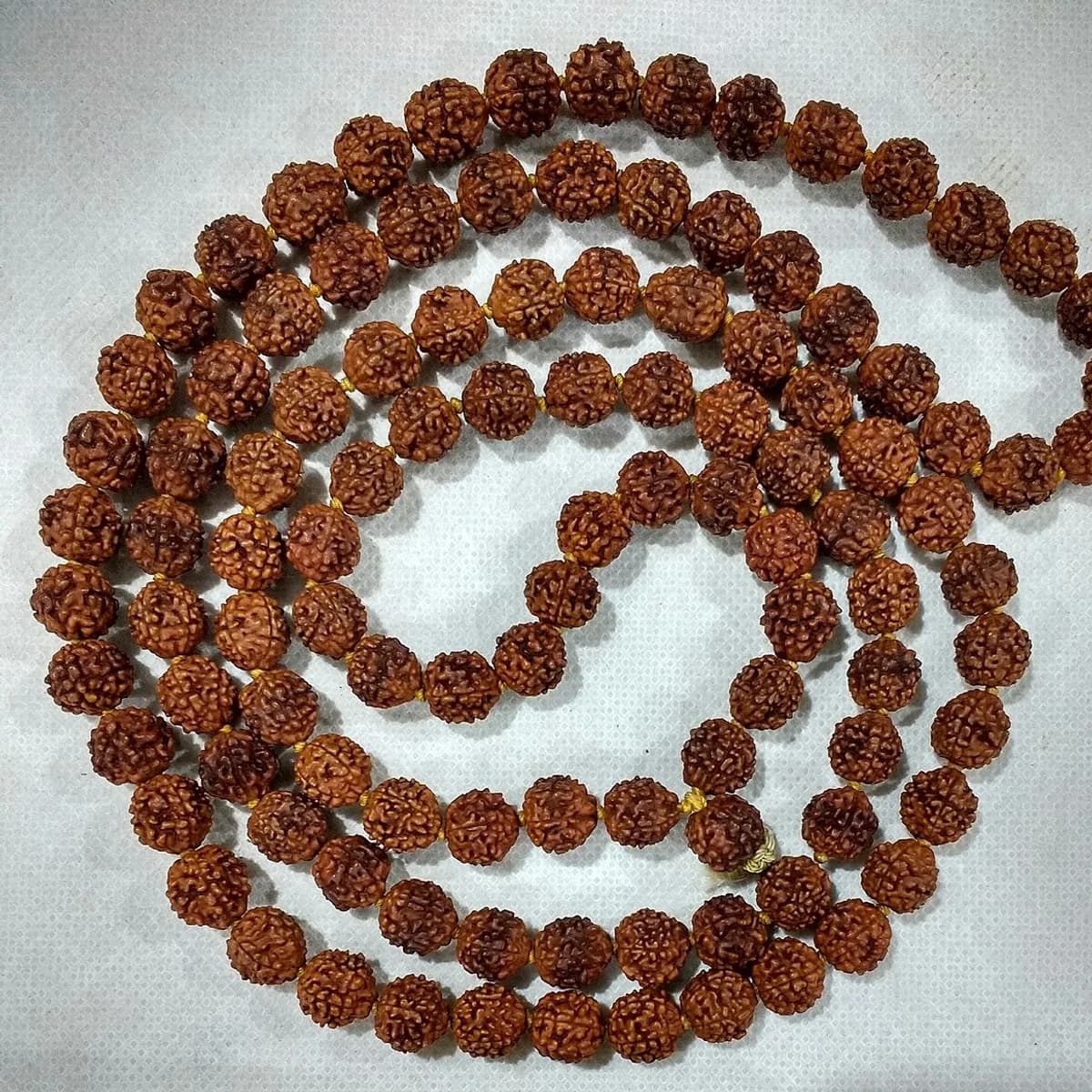
From a blue fruit to a bead
A rudraksha starts as a bright blue fruit on a tall evergreen tree. It takes weeks of soaking, scrubbing and drying before it becomes the bead on your thread.
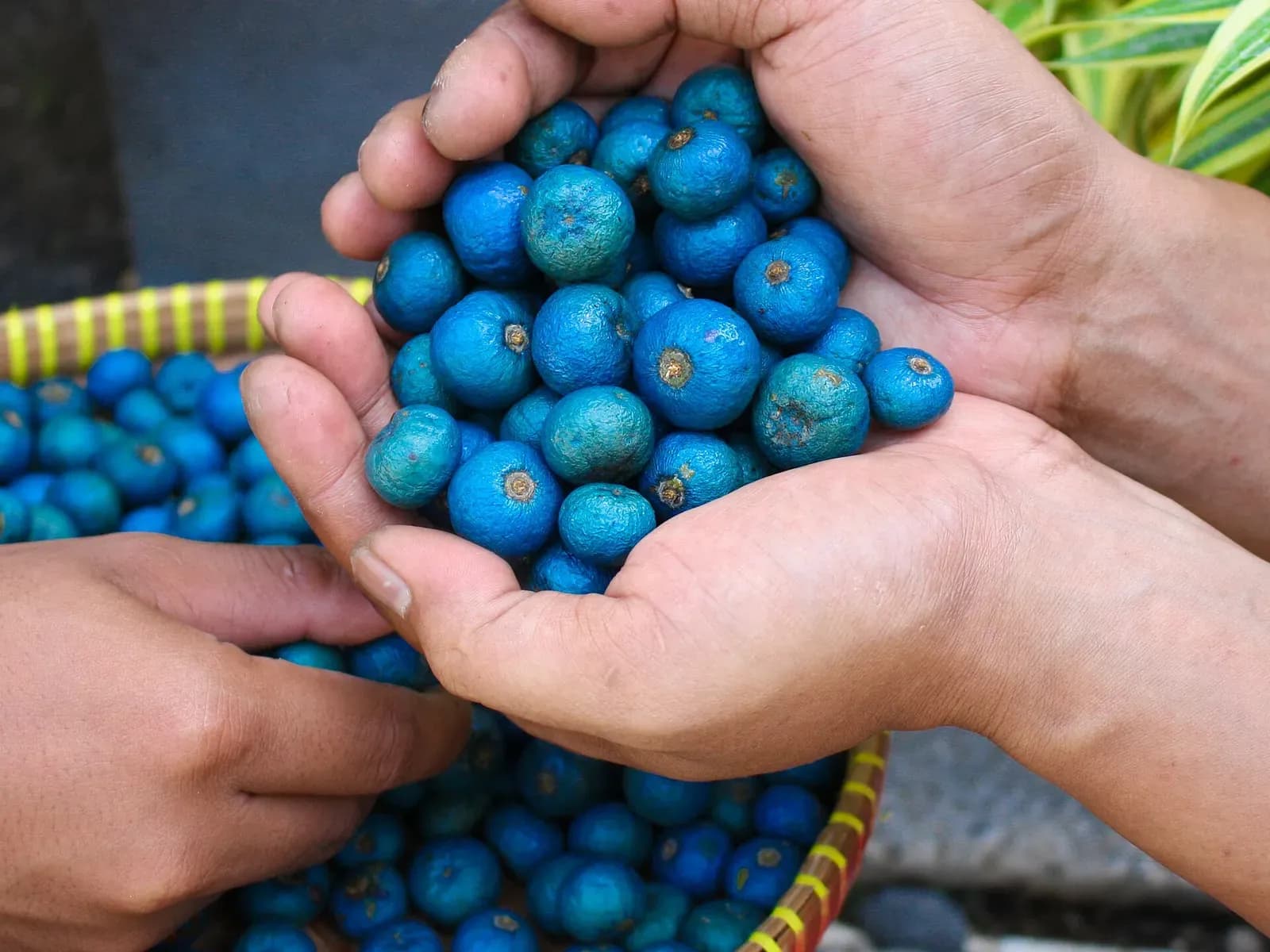
The rudraksha tree, Elaeocarpus, is a tall evergreen of the foothills, from eastern Nepal down to Java. After the monsoon it fruits: round berries a little bigger than a marble, with skin of a startling blue. The colour isn’t a pigment; it comes from the way the skin reflects light.
From fruit to bead
- The ripe fruit is picked, or gathered when it falls.
- It is soaked in water for a week or two, until the flesh softens.
- The flesh is scrubbed off by hand with a stiff brush, until only the stone is left: the bead, with its ridges and lines.
- The beads are washed, dried slowly in the shade, and oiled once so they don’t crack.
Nepal and Java
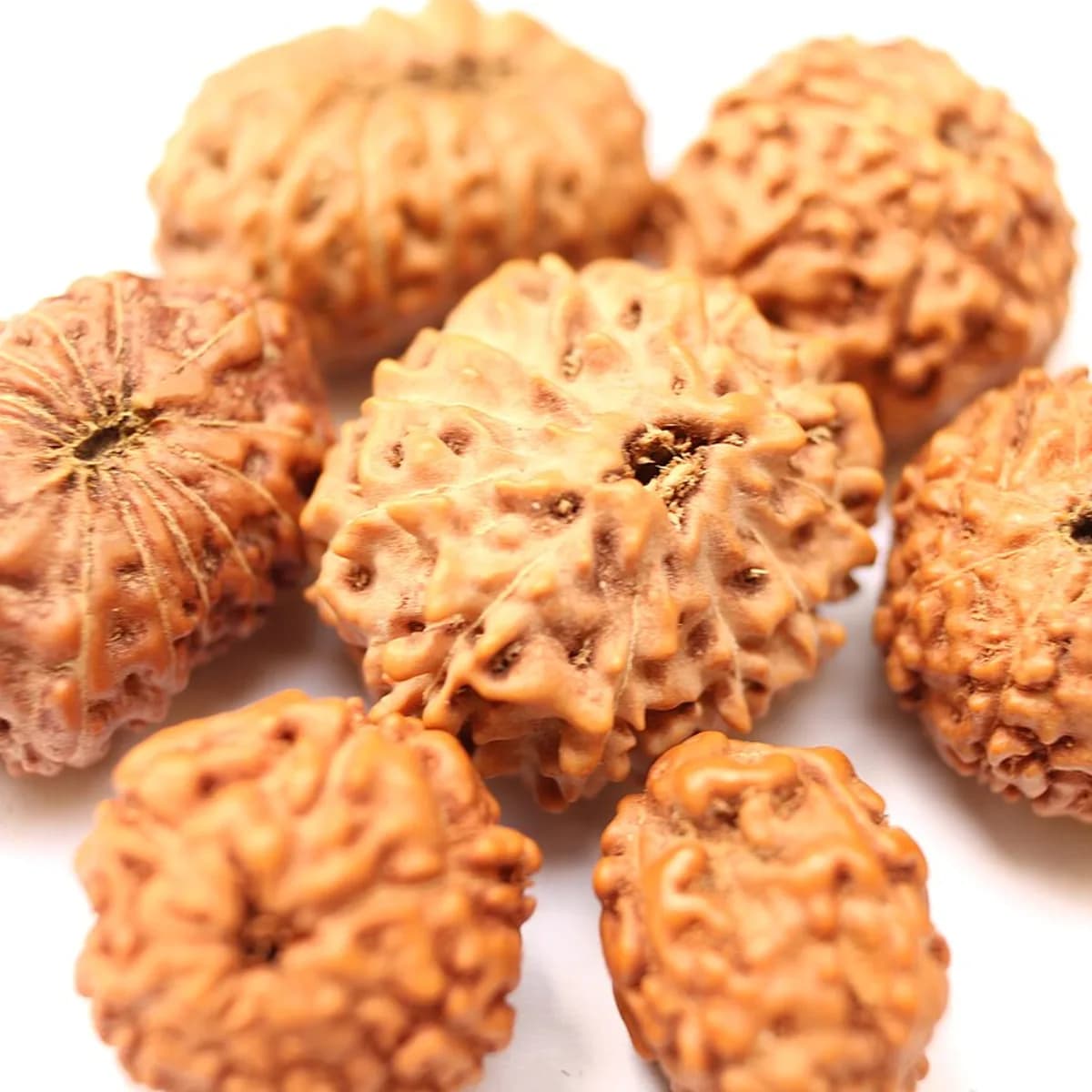
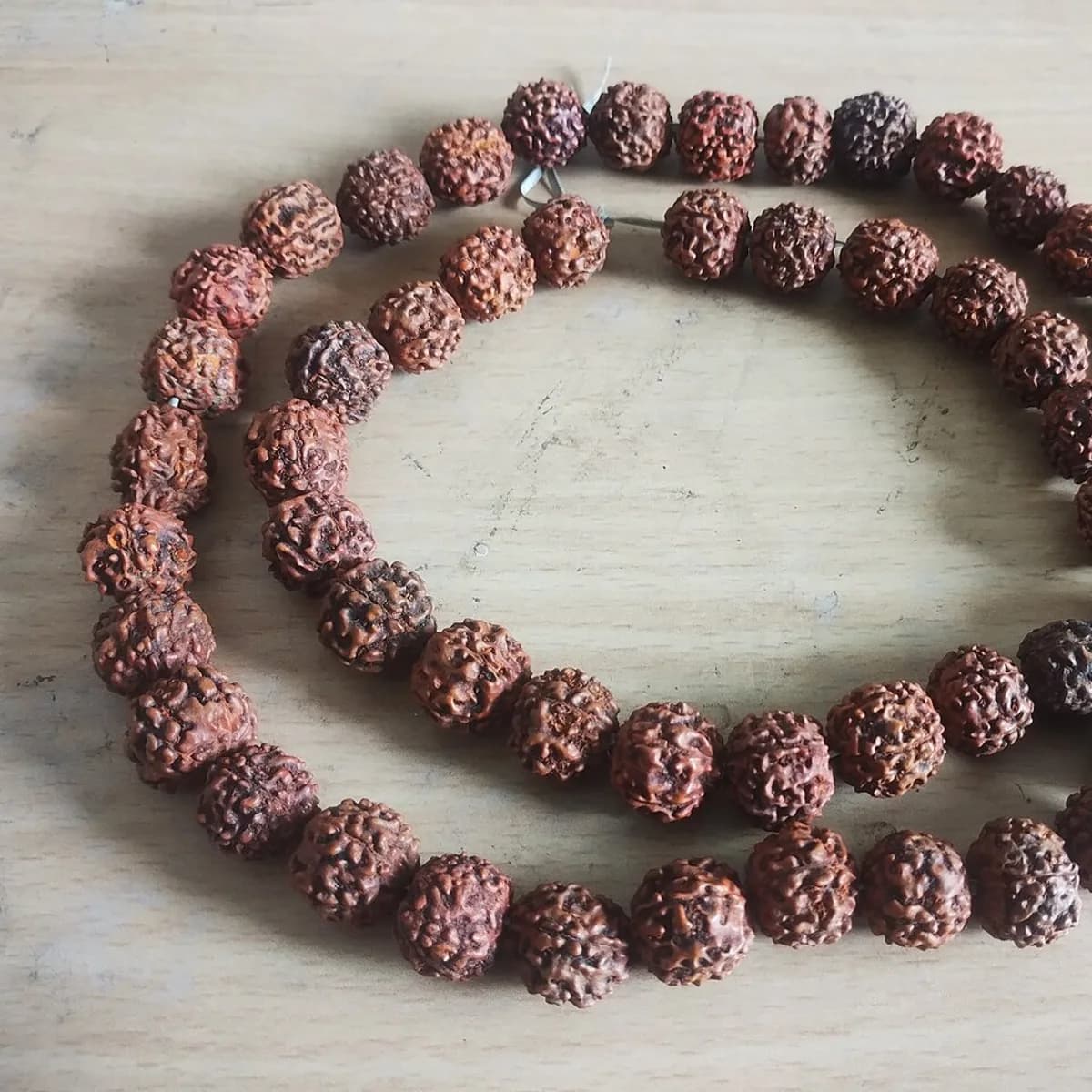
Trees in the hills of eastern Nepal give large beads, often 20 mm or more, with deep lines and sharp ridges. In Java the same family of trees gives small, smooth beads, mostly under 15 mm, which is why most malas are strung from Javanese beads. Ours, loose and strung, all come from Nepal.
At our counter
By the time the beads reach Rishikesh they are dry. We sort them on brass sieves by size, count the faces of each, and look at every one under a lens before it is tied on a thread or knotted into a mala.
In this story
What the story is made with, from our shelves.
 13% off