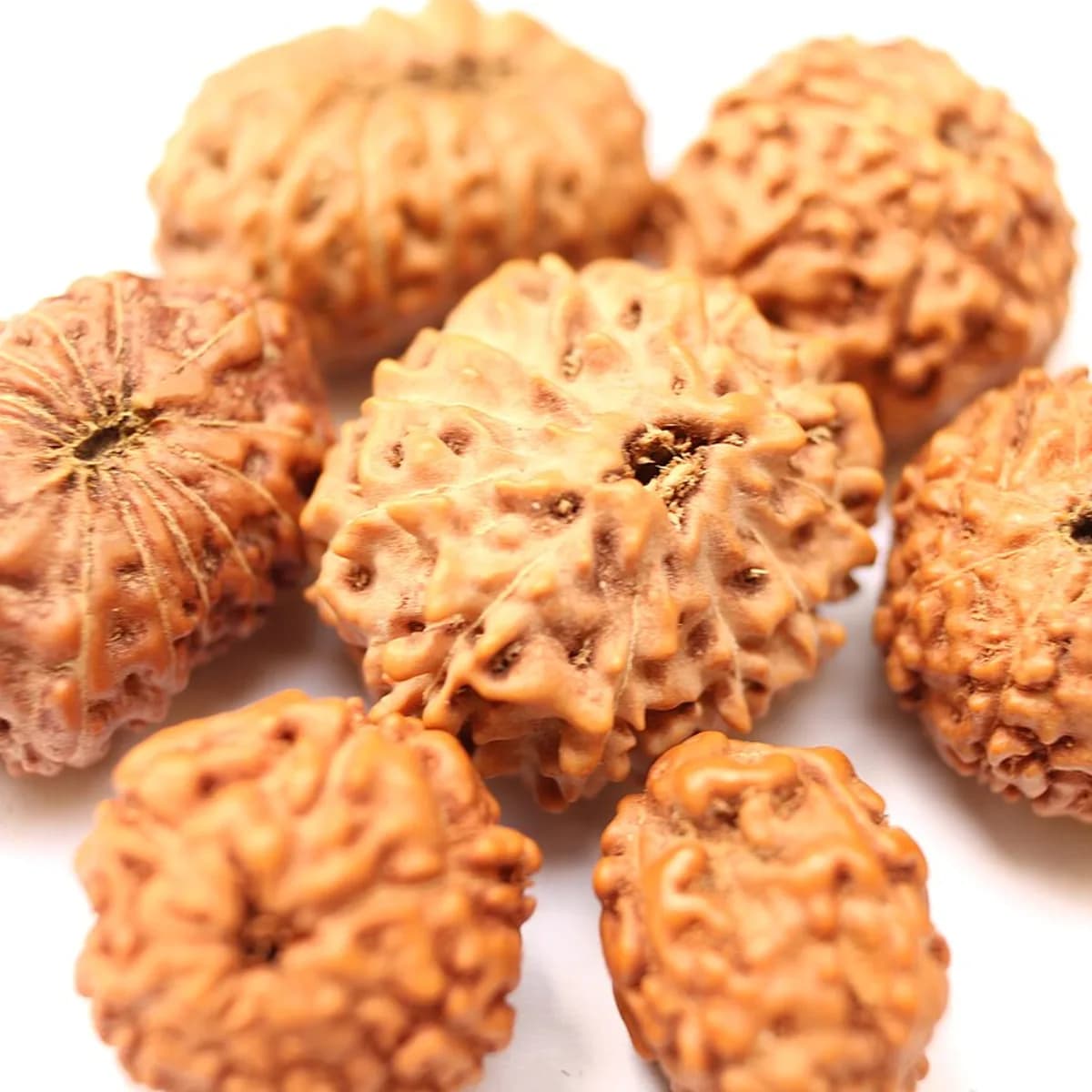
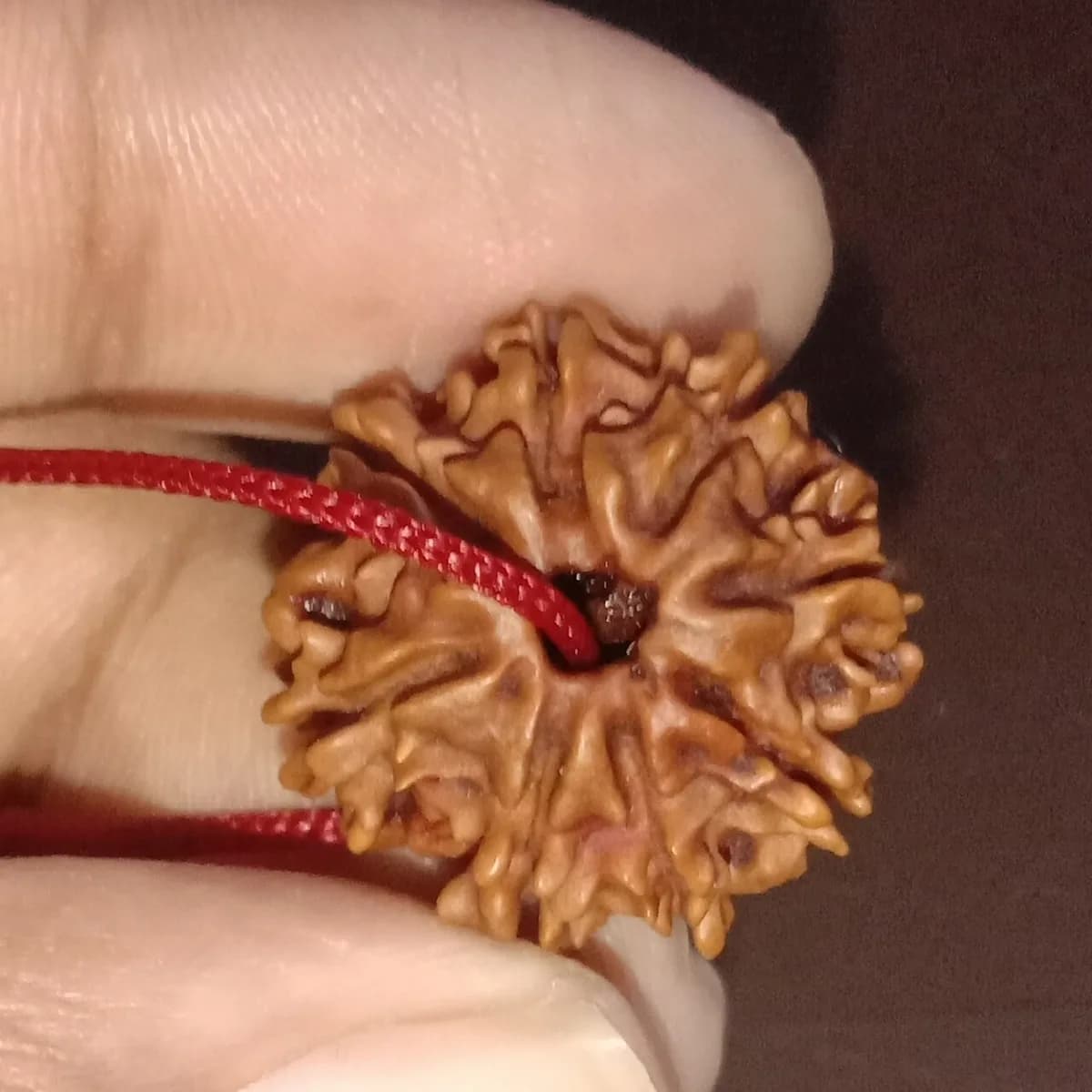
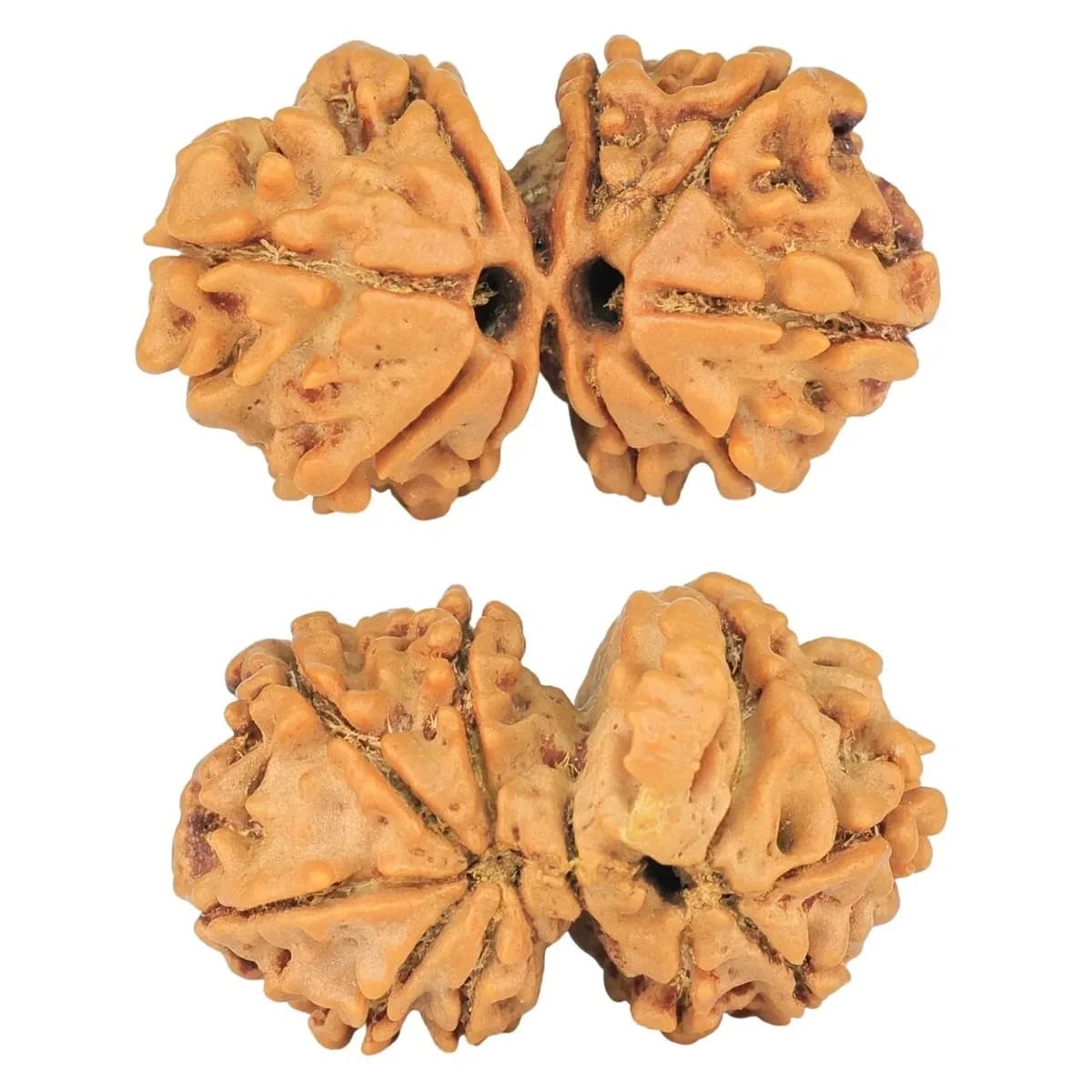
Counting the faces of a rudraksha
A mukhi is a line that runs the whole way from the top of the bead to the bottom. This is how we count them at the counter, and what to look for in your own.
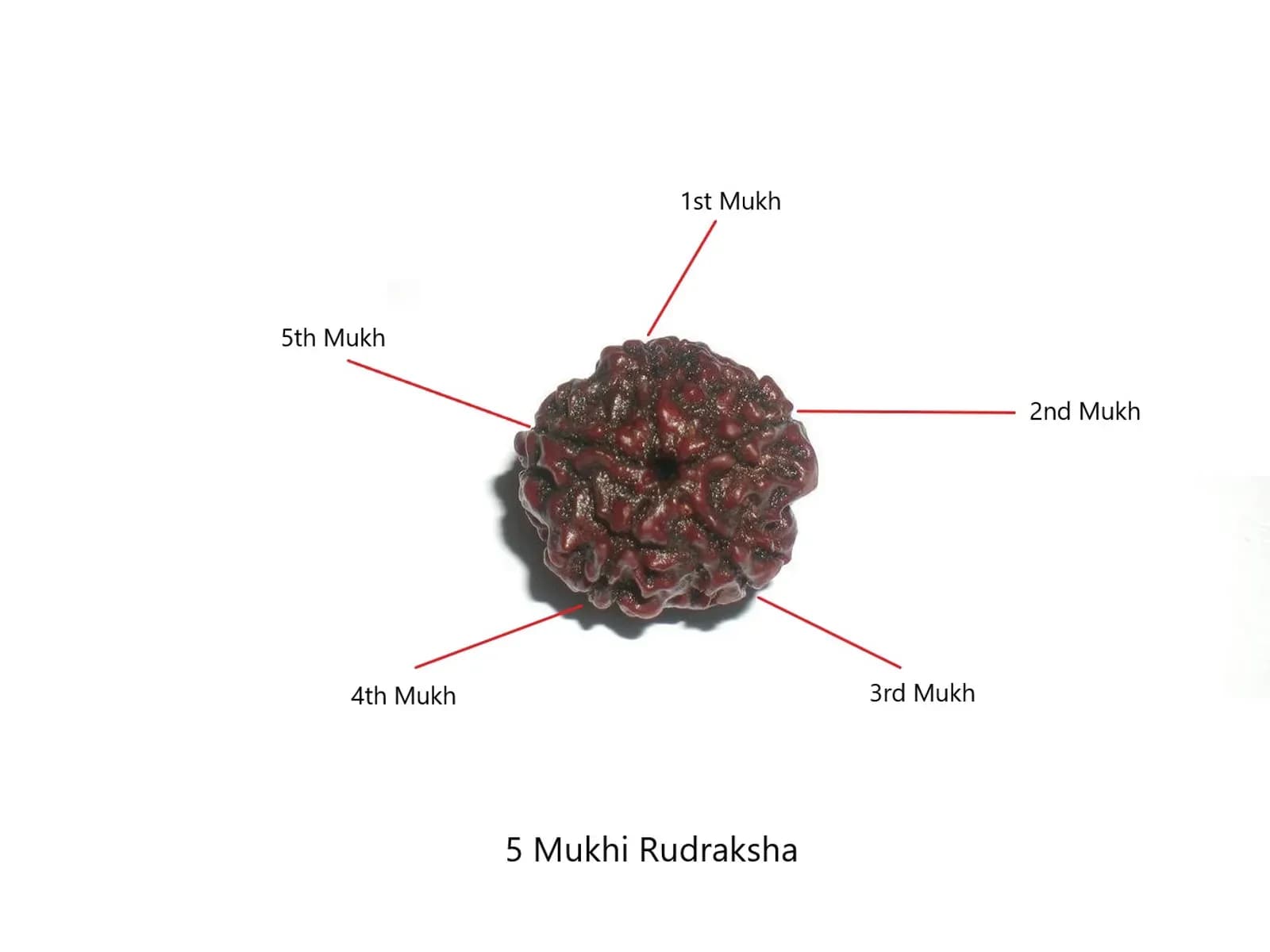
Every rudraksha has natural lines running down its surface, like the segments of an orange. Each line that runs unbroken from the opening at the top to the opening at the bottom is one mukhi, or face. Five lines, five mukhi.
How we count
- Hold the bead with the thread hole facing you, and find the top opening.
- Follow one line all the way down to the bottom opening. If it stops halfway or joins another, it isn’t a mukhi.
- Mark your starting line with a fingernail and turn the bead slowly, counting each line as it passes.
- Count again from a different line. We count three times before a bead goes into a lot.
What a lens shows
Under a ten-times lens, a real mukhi is a groove in the bead’s own skin: its edges are rough and uneven, and the ridges on either side carry on across it. A carved line is too clean and too straight, and it cuts through the ridges instead of following them. Look too for glue or filler where a crack has been closed; it is often darker and glossier than the rest.
Why five is the common one
Most rudraksha trees bear five-faced seeds, so five-mukhi beads are plentiful and cost little. Beads with fewer or more faces are rarer, and the rarer the count, the higher the price. That is also why the higher counts are the ones most often faked.
A test that doesn’t work
You may hear that a real bead sinks in water and a fake floats. It isn’t true: a dry, light bead can float and a fake can sink. Counting, and a lens, tell you far more.
In this story
What the story is made with, from our shelves.